
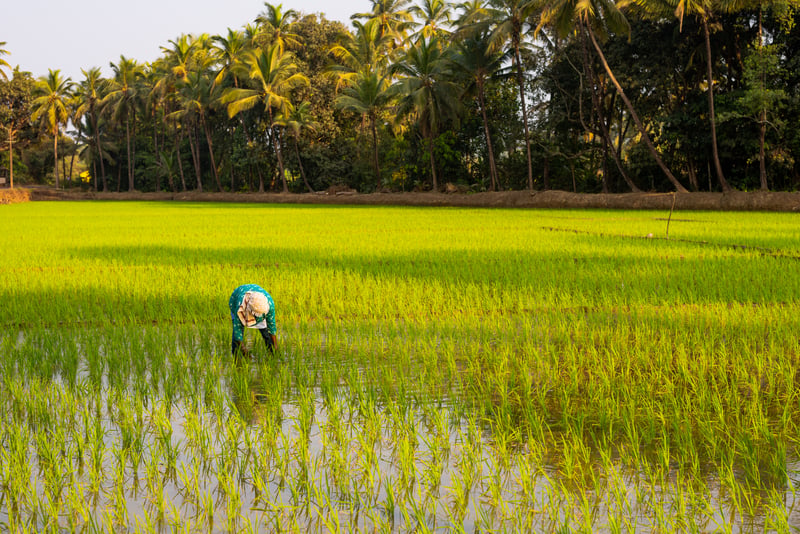

India’s Rice Export Pricing is Closely Linked to its Cultivation Cycle
India’s Rice Export Pricing is Closely Linked to its Cultivation Cycle
India’s rice export pricing is closely linked to its cultivation cycle.
The Kharif season, harvested between October and December, brings the largest crop arrivals into the market. This creates strong supply pressure and typically results in lower FOB prices.
On the other hand, the Rabi and Summer crop harvested between April and June is smaller in volume. As stocks tighten before the next major harvest, FOB prices often become firmer and more favorable for exporters.
In simple terms:
• Oct–Dec → High supply, lower FOB levels
• Jan–Mar → Stable market phase
• Apr–Jun → Stronger FOB realization
• Jul–Sep → Weather-driven market uncertainty
In the rice trade, pricing is not just demand-driven — it is harvest-cycle driven.
At Kirti Bhavya, we don’t only track buyers and freight markets. We track India’s crop calendar as closely as the market itself.